Showing posts with label Model railway magazines. Show all posts

Thursday, 10 December 2020

Christmas gift suggestions

2020 has been a difficult year so this Christmas why not spoil yourself (or a friend) with some wonderful presents. I have the following suggestions to help you (and Santa) on your way.

1. Take out or give a subscription to the Australian Model Railway Magazine

A subscription is a geat present, especially if you are giving it to someone who may just have a kindling interest in the hobby and who wants to find out more. A subscription helps the magazine as well so that it remains on a sound economic footing for the future.

2. One of a number of how-to books from Kalmbach Publishing

Kalmbach Publishing (USA) has a bevy of how-to books across a range of model railway subjects. This book, Applying lessons from the prototype is from renowned author Tony Koester and it's a beauty! You can buy these books direct from Kalmbach in the USA but try your local model railway shop in Australia first.

3. Another how-to book, this time from the military modelling fraternity

For those railway modellers who are already advanced in the hobby, taking some great tips on painting from the military modellers is a great way to develop new skills and improve your painting methods. How to paint with acrylics (first published in 2017) is from a well-known stable of military modelling, Mig Jemenez, who you may be familiar with from his line of paints. Sometimes, if a book is unavailable, you can pick one up from second-hand bookstores or a search of AbeBooks.

4. Books on the prototype are always interesting. The Byways of Steam series is fantastic!


Byways of Steam 33 is the latest in the series and features some great articles and photographs. The steam depots of Cootamundra and Tumut are featured in this issue from noted rail author, Ray Love. You can buy this book from the ARHS Bookshop, Eveleigh Press, or from hobby shops.

5. And if you want railways intertwined with history, then this book is for you!
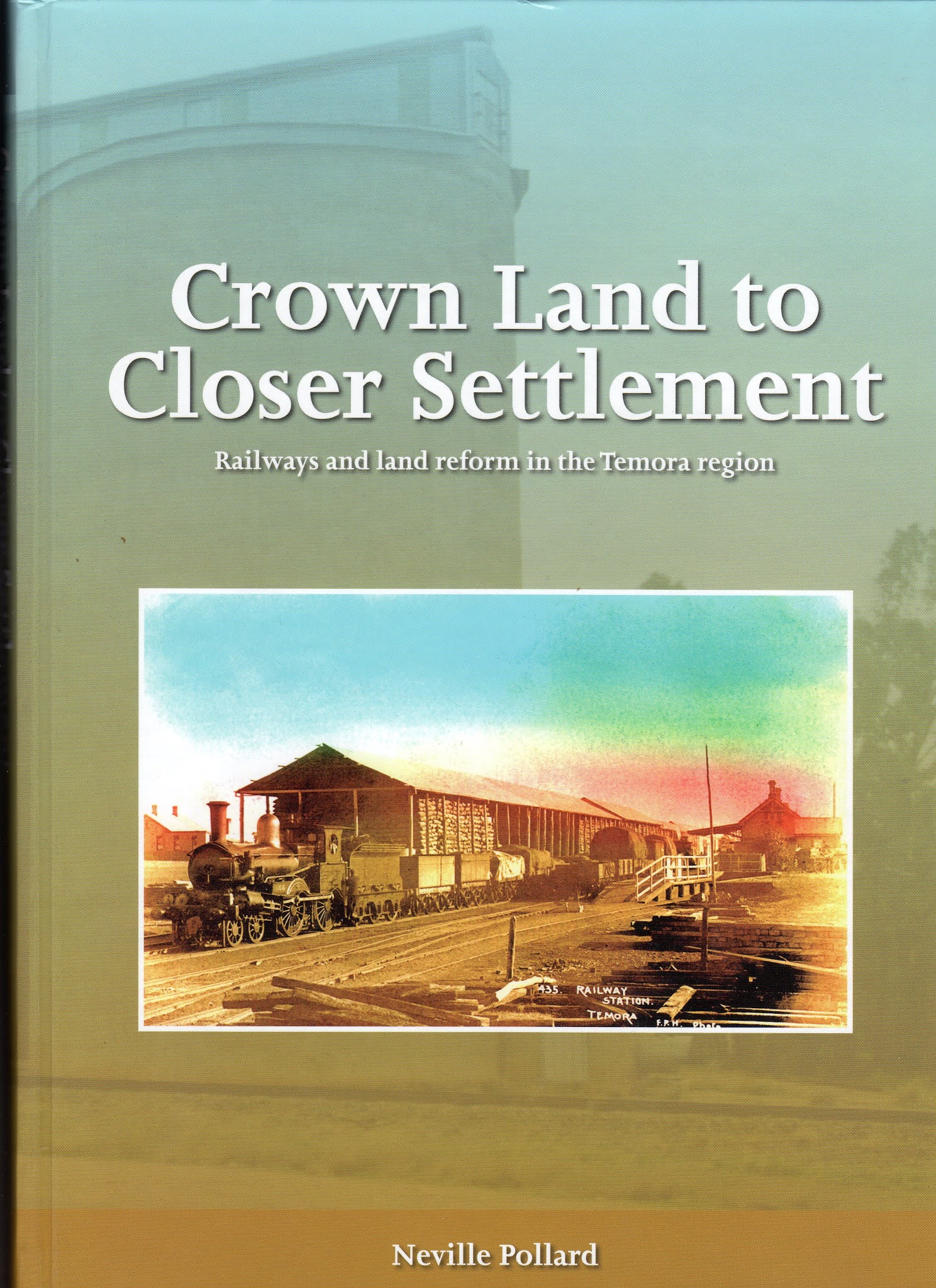
Neville Pollard has been a prolific author of articles for Australian Railway History and its predecessor, ARHS Bulletin. In this book, Neville has written a wonderful history of the Temora Region railways (encompassing many rural branchlines that included Lake Cargellico, Naradhan, Rankin's Springs, Burcher, and through the northern part of the Murrumbidgee Irrigation Area all the way through to Roto which joins the transcontinental line to Broken Hill and beyond). I highly recommend this book if you want to understand the importance of railways to the historical development of New South Wales. My copy came from the ARHS Bookshop.

6. In keeping with railway history, you can't go past author, Christian Wolmar, for a great read.

Fire and Steam (first published in 2007 but still available) is a wonderful account of the birth and development of the railways in Great Britain. As the book jacket says: "From the early days of steam to electrification, via the railways' magnificent contribution in two world wars, the chequered history of British Rail, and the bouyant future of the train, Fire and Steam examines the social and economical importance of the railway and how it helped to form the Britain of today". My copy probably came from Dymocks or Book Depository - try your local book shop first.

7. Lastly, you can never go wrong with a calendar for the coming year!


I purchased this NSW Rail Museum/Transport Heritage NSW 2021 calendar as a present for a former railwayman, now well and truly retired, but who maintains his interest in the railways. My copy came from Casula Hobbies in Liverpool, Sydney, but you can buy this calendar from other hobby shops or direct from the NSW Rail Museum.

There you have it - some great ideas for some great presents. But I think you'll need to act quickly because the mail deliveries this time of year can be a bit slower due to the sheer volume of mail. And, in case you're wondering, these suggestions are personal recommendations - no payments received!

Merry Christmas and a Happy (and healthy) New Year to everyone. Let's hope 2021 is a good one.

Saturday, 8 February 2014

Model Railroad Planning 2014

Just got my copy of Model Railroad Planning 2014 direct from Kalmbach Publishing. As usual, it is full of interesting articles and some excellent model railroad photography.


The first article is "operating a busy passenger terminal" which is based on the New Orleans Passenger Terminal (NOUPT). The modelled station is huge and exceptionally well done, including fully lit interiors. The layout is HO scale.

The next article is the "Southern Pacific's Siskiyou Line" in N scale. The layout size is 25 x 27 feet which is pretty big for an N scale layout. One of the things I like about the articles in MRP is the emphasis on the decision-making process in designing a layout. This article didn't disappoint in that department.

"Alice Street in 4x8 feet" is a prototypical track plan based on the Santa Fe rail-marine operation out of Oakland, California. There are some fascinating historical photos (B&W) here.

The next article is called "A moving experience" about a layout built for a newly purchased retirement home. The original layout based on Moscow, Idaho (I think the Americans pronounce it moss-cow) was featured in Model Railroad Planning in 2008.

My favourite article is "Switching for breakfast". This article describes the prototypical train operations for switching (shunting) the large Post Cereals food complex at Battle Creek, Michigan. A description of a typical shift switching the industry was very informative. For me, the best part of the article was a table showing the different spots (positions) within the Post Cereals complex that had to be switched with what particular product (receiving and shipments).  This table alone gave me plenty of food for thought in just what variety can be achieved with a single, large industry on a model railroad. A HO and N scale track plan accompanies the article providing suggestions for how the prototype can be modelled.

A short article on five layouts in four different scales that occupy 14 x 34 inches was next.

Lance Mindheim follows with an article, "Simple plan, plenty of action" based on a southeastern USA switching layout. Lance makes a nice distinction between planning and design - planning deals with more strategic issues that will inform the decisions about overall layout design (track arrangements, for example.). The suggested model railroad layout plan is for a room size of 12 x 13 feet. Lance includes both a plan of the layout and a plan showing switching options.

"Big train, small layout" has an interesting circular design based on a figure eight. It is a portable layout used for model railroad exhibitions and is a little bit different to the norm.

Byron Henderson's article, "North Western's Chicago commute" offers some thoughts about a model railroad track plan 8 x 20 foot in size. The layout is based on the Chicago & North Western's commuter services between the North Western station and the western suburbs of Chicago. Again, the thinking behind the layout design is what is key to this article.

"Slogging up to Locust Summit" is a model railroad based on the Reading Co.'s train operations over Locust Summit near Gordon, Pennsylvania. The track plan fits into a space of 31 x 40 feet and includes plenty of big hauling steam locomotives on this predominantly coal-hauling route. An interesting depiction of a typical day at Gordon gives a nice summary on operations. There are some nice model photographs in this article as well.

Tony Koester next goes out on a bit of a limb with an idea about modelling the same town on two decks and switching cars between them. This idea could be a way to save on available space.

My other favourite article from Model Railroad Planning 2014 is the article by James McNab: "Choosing the right place at the right time". The article describes the importance of time and place in consideration of design and the need for being selective about motive power and rolling stock. It is important to balance traffic levels for certain times of the year (for example, seasonal factors play a major role in agricultural production). James' layout is the Iowa Interstate Grimes Line. The article has both model and prototype photos. Videos of this layout are available on the Model Railroader website to registered viewers: see www.ModelRailroader.com

Model Railroad Planning 2014 ends with articles on staging yards, improving a published (Atlas) track plan, space-saving use of "wye-less wyes", dummy tracks, and modelling a passenger terminal in 15 x 18 feet.

While the focus of the annual is on US modelling and prototypes, there is enough information and thinking potential here for anyone interested in model railways to find something of use. As usual, this publication is of high quality and recommended.

Wednesday, 3 July 2013

Congratulations AMRM


The 300th issue of the Australian Model Railway Magazine (AMRM) is a significant achievement.  As the recent articles on the history of AMRM attest, many people have contributed to the production and commercial success of the magazine over the past fifty years. Bob Gallagher and Alan Brown were to my mind the cornerstone of that success.

The current issue (June 2013) of AMRM continues the tradition of featuring Australian model railway layouts. Glenburn is a truly wonderful layout depicting a time that is often not often portrayed on a model railway. Over the years there have been many fine layouts depicted in the pages of AMRM which have provided an inspiration to us all. I must add that I was very impressed with the photo taken by John Burford on page 55 of the current issue showing a nicely lit cameo scene from his new On30 layout. John's reminiscences are similar to mine as well.

I bought my first copy of AMRM (Issue 79) from Micro Models at Hornsby in 1976. In those days Micro Models was located in the Westfield Plaza shopping centre. Micro Models still exists, under different ownership, and is now located on the Pacific Highway at Hornsby. The success of this hobby store over an equivalent amount of time as AMRM is also worthy of note.

That first issue of AMRM for me was the trigger to take model railways seriously and to focus on Australian (NSW) railway modelling. Up until that time, I had the usual assortment of Triang/Hornby models from train sets acquired as presents over the years. I had no permanent space for a layout so the model railway was only put up occasionally, on a carpeted floor no less!

In that particular issue of AMRM were articles on The Mayfield Lines, the SAR 720 steam locomotive, making styrene windows, and three pages of reviews. I was later able to visit The Mayfield Lines in person, an O gauge wind-up model railway in the garden of Len Clark. Ironically, this type of model railway was already "old hat" but it emphasised to me how much the hobby had to do with imagination as much as it did with constructing a piece of railway reality.

I studiously acquired back issues of the magazine and bought each new copy as it appeared in the hobby shop. Around the same time, and not far from where I was living at the time, was Mansfield Hobbies at Waitara. I would have to say that it was a combination of AMRM and David Anderson from Mansfield Hobbies who established my direction into the model railways of NSW.

While many years have passed since those days, and I now model a US prototype railway, AMRM was a part of my model railway development. And while I may decry the cluttered page layout of the magazine and the front cover that needs a modern facelift, I don’t fail to appreciate the hard work that goes into the regular production of the magazine and the exceptional quality of the photographs - James McInerney is to be congratulated.

And speaking of model railway magazines, I should add that my involvement with the Australian Journal of Railway Modelling ceased in October 2011, four months after the magazine was successfully relaunched at the Epping Model Railway Exhibition with issue 11. Stephen took full control of the administration, sales, distribution, communication, and publishing of the magazine after that date. I hope that another issue will be forthcoming because AJRM has given us some excellent articles in the past.

Tuesday, 1 January 2013

Happy New Year 2013

Happy New Year!

I am keeping my resolutions to myself this year as past failures have been rather embarrassing. But I am starting off the New Year with the desire to keep up-to-date with my model railway reading which lapsed last year (along with model railway construction and blog writing) due to other time pressures.

And speaking about time, the people at Kalmbach Publishing in the US must be in a time warp of some sort because yesterday (31st December 2012) I received my latest copy of Model Railroader - the February 2013 issue. Since it is now the 1st of January, the magazine is a month ahead of the cover date. No matter - it's a good read over the January holidays while I wait for the January/February issue of the Australian Model Railway Magazine due out later this month with a cover date and issue date more in keeping with reality.

The February 2013 Model Railroader does have some good reading.


In particular, I am following the progress of the quarry branch series. Part 2 is in the latest issue. I am also following progress on the quarry branch articles with the video blogs that I can see as a subscriber to Model Railroader. I like this feature as the video nicely supports the article content.  

Model Railroader, like other model railway magazines around the world (e.g. British Railway Modelling and Railroad Model Craftsman) is also available in digital format. I haven't committed to the digital formats as yet as I find the hard copy paper editions easier to read. However, storage of paper magazines is a problem. I am sticking with the paper magazine for Model Railroader and Railroad Model Craftsman for now, but I do buy the occasional British model railway magazine as a digital copy. And I do love Model Railroad Hobbyist which is digital.

Kalmbach Publishing and Model Railroader will be moving further into digital content in a couple of months time with the launch of its MRVideoPlus website which will become an additional source of regular information with video, 3D track plans, and how-to articles. My only concern is whether the new MRVideoPlus will become the prime source of content at the expense of the magazine. We will have to wait and see.

For now, it's sitting back with the hard copy of the February 2013 issue of Model Railroader and enjoying the read.


Thursday, 29 July 2010

Model railway magazines - what do we like?

I had intended to do a quick summary of the contents of the latest issues of model railway magazines I have received recently. They include Australian Model Railway Magazine (AMRM), Model Railroader, Railroad Model Craftsman, and NZ Model Railway Journal.

However, rather than just describe the contents of these magazines, I want to open up a discussion about model railway magazine content. Now I realise that content for model railway magazines mostly comes from the readers themselves, and that magazines can only publish content that they receive. Except in some cases where the staff of a magazine write their own articles, nearly all model railway magazines published around the world rely on contributed content from readers and railway modellers.

Nevertheless, I am interested to know what people want from their model railway magazines since the readers are in fact the consumers. What are the features of a model railway magazine that readers want from such publications? What do readers enjoy and dislike about model railway magazines in general?

For me, I have a few key preferences that cover what I like best in a model railway magazine. These features include:

1. Model railway industry news - I like to be able to go to one place in the magazine to read a summary of what the local model railway industry is up to, especially about new products and new manufacturers.

2. Model railway layout article - I like to read about other people's model railroad layouts. What I really like in these articles is not just reading a description about the layout, but to get some insights into the thinking behind the layout, the construction (including scenery and buildings), and operation. There should be at least one "method" or "detailed tip" for readers to learn about. The article doesn't have to include ALL of my pet wants, but simply describing a layout is not enough for me. Good photos really help too, as does a track plan.

3. A construction article - I like to know how people do things in the hobby, whether it is scratchbuilding an industry or designing a traverser for a layout. And I need some detail - I need to get enough information in the article to be able to build the item, or use the techniques for something else. A construction article to my mind is not just what someone has done, it's about giving the reader something to do as well.

4. Advertisements - Well, they largely pay for the magazine so that's important! But I also like to know what's going on and what's coming up (as in point 1).

5. Innovative thinking - I like to hear about innovation in the hobby and different ways of doing things or seeing things. Innovation is not something a person or a magazine can initiate; innovation is one of those rare and intangible occasions that just happen. I realise this, and I certainly don't expect innovation to be featured in a model railway magazine on a regular basis like an editorial! However, when I do read about innovative thinking in the hobby, I always like it and appreciate it.

That's it from me; anyone else with an opinion on what they like (or don't like) about model railway magazines?

Wednesday, 30 September 2009

Model railways across the Tasman

I just received my latest issue of NZ Model Railway Journal. I really want to give this model railway magazine a real plug since I regard it as one of the finest model railway magazines published anywhere in the world.

That's quite a statement. Let me elaborate.

The Journal is produced to an excellent quality, both in terms of production values and in content. The Journal is printed on fine quality glossy paper, has brilliant photographs of both model and railway prototypes, and has some excellent model railway articles. The text is clear and easy to read. The way the magazine articles are presented is simple, organised, and straightforward. With plenty of half-page and third-of-the-page sized photographs, images are easy to look at and with informative captions.

Obviously, New Zealanders are the main audience. The "favoured" scale is 3/16 inch to the foot - S scale (1:64). In this scale one can use track for HO scale standard gauge railways that in S scale represent the narrow gauge 3'6" gauge used by the New Zealand railway system.

In the latest issue though is a layout article built to 1:150 scale and despite the freelance design, is a very fine layout. The images are superb! And if you're into actually model railway construction of wagons and locos, there are two great articles in the latest issue on building a Roturua guards' van and another article on matching rods and frames for loco construction. There is plenty of news and some fine prototype photographs in black and white - very much in the style of the UK finescale magazine Model Railway Journal "real atmosphere" - as well as a couple of colour shots taken at Reefton in the 1950's.

The Journal can be purchased in Sydney at the ARHS Bookshop at Central Station. Maybe give the shop a call before Saturday and see whether they can bring some copies of the NZ Model Railway Journal to the AMRA model railway exhibition at Liverpool this coming long weekend. Alternatively, just subscribe to the Journal via the website.

Whilst the New Zealand content may not be relevant to some people, I always find something of interest to read. And as to publishing standards, the NZ Model Railway Journal is one of the best - a great credit to the voluntary editorial and production team. Well done!