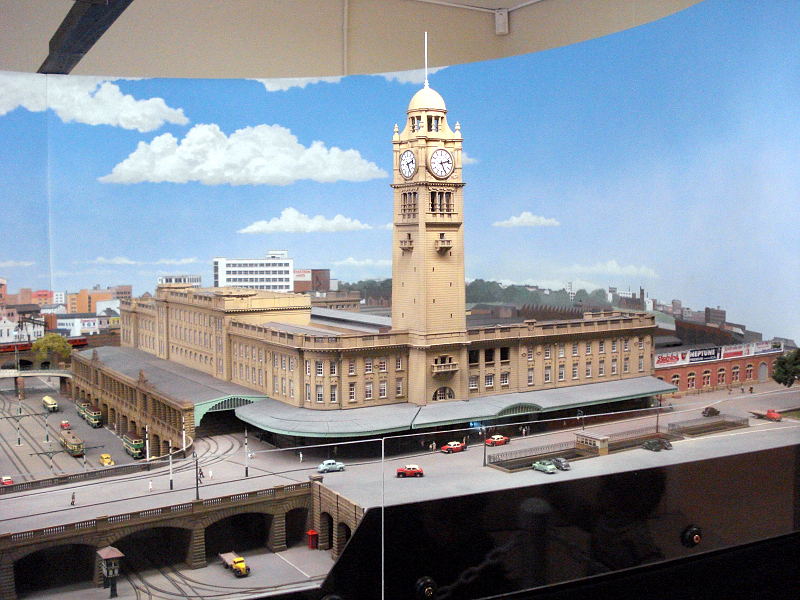
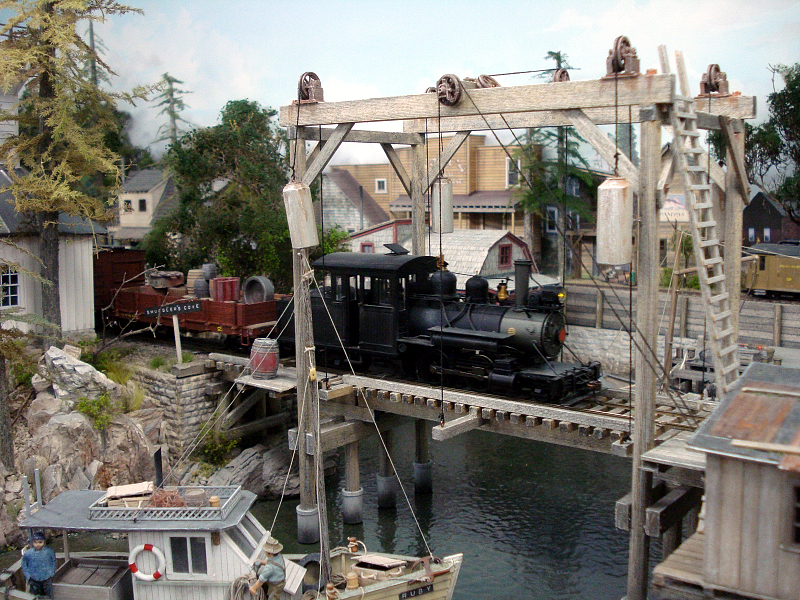
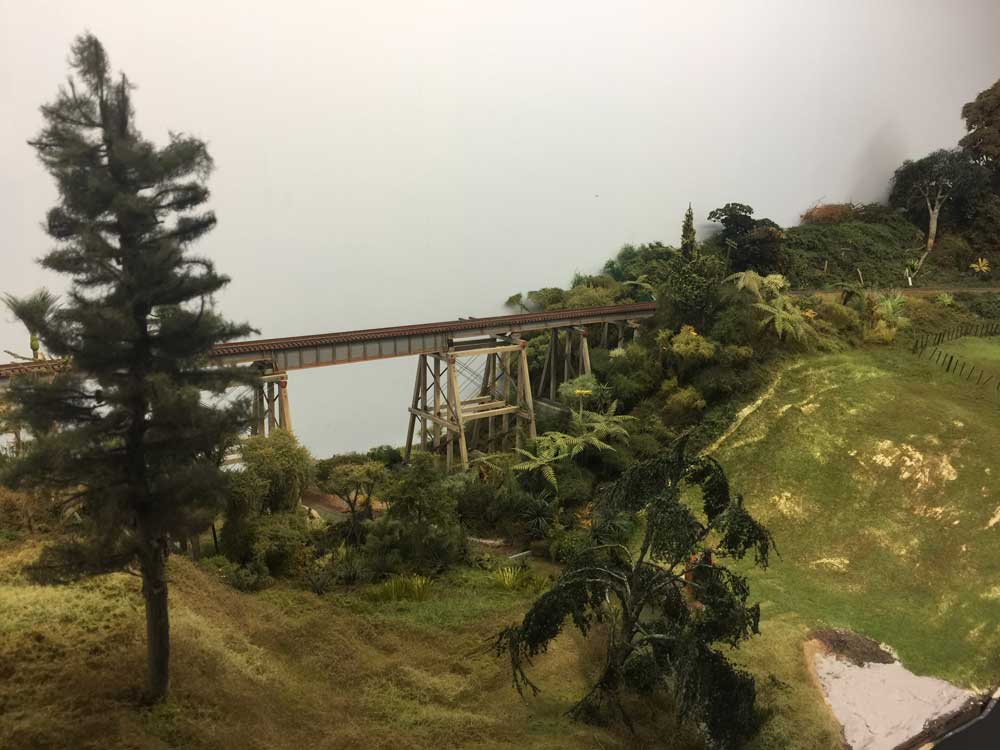
Eleven years ago I attended the Wagga Wagga Model Railway Exhibition. It seems like yesterday. I wonder if people are building model railway exhibition layouts now during the Covid-19 pandemic in the hope that exhibitions will return next year. This prompted me to check out other model railway exhibition programs from the past in my collection. It would be good to reminisce about all those exhibition layouts from the past and go through my archive of exhibition photos.
Monday, 9 November 2020
Model Railway Exhibition Programs
Sunday, 25 October 2020
Virtual exhibitions - some thoughts
Are virtual model railway exhibitions the future? Will they become the norm?
My previous blog post introduced the "Great Electric Train Show" virtual model railway exhibition. That virtual exhibition is now over but there are more virtual exhibitions coming up, including this one from the Oxford District Model Railway Club in England - Oxrail 2020. This virtual exhibition will be online from 24 October to 1 November, UK time.
Virtual model railway events also take different forms. The National Model Railroad Association (NMRA) ran a series of virtual events (NMRAx) this year from all around the world. More generally, there are live streaming options on Facebook and a plethora of layout videos on Youtube.
After some in-person discussions with a couple of railway modellers (who choose to remain anonymous), the question is whether virtual exhibitions will become the norm and take over from traditional on-the-ground model railway exhibitions. They both said that while a virtual model railway exhibition may be a good idea during the current Covid-19 pandemic, they'd hate to see virtual model railway exhibitions take over completely. This photo pretty much sums up their argument.
My learned friends put forward these three arguments:
1. model railway exhibitions are essentially social events, whether among friends or family, or just making those annual model railway contacts with other exhibition die-hards. Virtual exhibitions cannot replicate the level of interaction and social dynamics of an on-the-ground model railway event.
2. model railway exhibitions allow visitors to look at whatever is of interest to them and focus on any particular train or scene of their own choosing. They can spend 17 seconds or 17 minutes taking in the whole sweep of a layout down to the finest of details. You can ask questions and get information directly from the exhibitor in real time. The in-person model railway experience is totally self-directed. For some high quality layouts, the feeling of actually "being there on the prototype" can
transform a model railway into a truly personal and evocative experience.
Virtual exhibitions are beholden to one individual's videography, the lighting and the camera angles, as well as the editing of the online video with limited Q&A options. (As an aside, another discussion involved whether virtual exhibitions were really any different to a catalogue of Youtube videos, and whether virtual exhibitions needed high quality video standards to differentiate themselves from the average Youtube experience).
3. model railway exhibitions are also about the commercial stands - not just the buying, but also the chatting about upcoming or new items; getting advice and modelling tips; and the shared experience one has with modelling friends "ooohing and aaaghing" together over models in display cases or bargains to be had. In other words, the on-the-ground experience with the traders is much richer and more meaningful than any infomercial from a virtual exhibition. Anyone visiting Anton's stall at a model railway exhibition will have a fair idea of what this is all about....
I pretty much agreed with these sentiments. But is this just a preference based on years of exhibition attendances and our general demographic? Would virtual model railway exhibitions create new ways to attract the public to the hobby? It's hard to know at this stage, but I don't think it has to be an either/or situation.
Personally, I don't see virtual model railway exhibitions taking over from on-the-ground exhibitions once the health issues of the pandemic are controlled (whenever that may be). Layouts still need to be built. I know exhibitors like showcasing their work in person as it allows engagement with their peers (one-upmanship?) and enthusiastic compliments from the public. It's social for them as well. Making a video about their layout would be an added impost, and something that not everyone can do very well. I imagine the commercial traders also like the personal contact. However, I don't know if on-the-ground exhibitions are more financially rewarding compared to online events.
For now, I will enjoy watching any quality virtual model railway exhibition from the comfort of my home office. I'll still watch a selection of layouts on Youtube (for example, Dean Park Station, Everard Junction, Seaboard Central, and Central Jersey in N scale) and more commercial offerings such as MRVideo Plus and TrainMasters TV). But I'll still be yearning for a return to the exhibitions of yore, meeting up with kindred railway modellers, checking out layouts, and having a good chat among friends. Let's hope we can resume normal life as quickly and as safely as possible.
Monday, 12 October 2020
Virtual model railway exhibitions
It was with great delight that I received an email reminder about a UK virtual model railway exhibition - the Great Electric Train Show on this week 9-16 October. The exhibition is organised by Key Model World, the publisher of Hornby Magazine and Airfix Model World. You can see that the website format for the virtual exhibition and the two magazines share a common look and feel.

The exhibition website says: "New features will be going live here throughout the weekend (just passed) offering you model railway inspiration, demonstrations, the latest news, quizzes and more at your finger tips. We hope you enjoy the show!"
The layout videos I have watched so far are superb and really showcase both the layouts and the videography. The videos were mainly done by Key Model World, including commentary. Having a professional video library of layouts from or for Hornby Magazine obviously makes a huge difference to the visual experience compared to what one might commonly see on Youtube where the video quality ranges immensely, depending on the equipment, lighting, and skills of the Youtuber.
Key Model World hopes to have the 2021 Great Electric Train Show back on the ground next year. Naturally, this will depend on the pandemic situation at the time. However, virtual exhibitions are a great reminder that one can still showcase some great layouts and products even if we can't be there in person. And who knows when a return to "normal" exhibition attendance will occur?
Tuesday, 6 October 2020
Exhibitions - we miss you!
The Labor Day weekend has passed and there was no Sydney Model Railway Exhibition this year because of Covid-19. Who would have thought that when I last posted on this blog (January 2019 on exhibitions) that we'd all be longing to go to a model railway exhibition...almost anywhere!
All those unanswered questions about model railway exhibitions and whether they have any impact on the future of the hobby seem superfluous now. In one way, by not having model railway exhibitions, the answer to whether we need model railway exhibitions to support and grow the hobby is a resounding YES! As Joni Mitchell said, "You don't know what you've lost 'til it's gone".
So, as a way to reminisce about model railway exhibitions, I have selected a few layout images from a small back catalogue of photos to share with you. They obviously do not cover all layouts from the exhibition circuit over the years but I hope they can still bring back memories and inspire. To make the image bigger, click photo once with the mouse or tap once on the photo if using a touch screen device.
Photo 1: Sydney Central (N scale)
Photo 2: Smuggler's Cove (O scale narrow gauge)
Photo 3: Arakoola (O scale)
Photo 4: Barcoola (HO scale)
Photo 5: Mile Post 638 (HO scale)
Photo 6: Binalong (HO scale)
Photo 7: Oddwalls (HO scale)
Photo 8: Maryborough (HO scale)
Photo 9: Yendys (HO scale)
Photo 10: Waterfall (HO scale)
Photo 11: Mango Mango (O scale narrow gauge)
Photo 12: Enoshima (N scale)
Photo 13: Over the Fence (HO scale)
Photo 14: Goulburn (HO scale)
Photo 15: Wallerawang (HO scale)
Photo 16: Eskbank (HO scale)
Photo 17: Twelfth Street Yard (HO scale)
Photo 18: Sandford (N scale)
Photo 19: Generic (mainly US) layout from NMRA Coffs Harbour (HO scale)
Photo 20: Dungog (HO scale)
Photo 21: CSX/BN layout (HO scale)
Photo 22: Tyobic (HO scale)
Photo 23: Everton (HO scale)
Photo 24: Brisbane Waters (HO scale)
Photo 25: Brunswick Park (HO scale)
Photo 26: Moonan Flats (O scale)
Photo 27: Jackson Creek (narrow gauge)
Photo 28: Leonville Junction (G scale)
Photo 29: Mullet Creek (HO scale)
Photo 30: Industry Lane (OO scale)
Last one (couldn't resist) (Sydney Central, N scale)
Let's hope that at some safe time in the future we can all go out and attend model railway exhibitions in person. The layouts, the commercial stands, and the social aspects are all well and truly missed.
Monday, 7 January 2019
Looking ahead 2019 - Exhibitions
In 2019 I have a number of things I would like to achieve; some even related to model railways and this blog. As an aid to help me on this treacherous road ahead, my blogging will become what it was originally intended to be: a place to put down some thoughts about model railway layouts and the hobby in general. Over the past few years, the bulk of my posts were about exhibitions. I know that many people really enjoyed these exhibition summaries and accompanying photos. However, I am less inclined to visit exhibitions these days and even less inclined to photograph the same layouts over and over again.
That said, my first few posts for 2019 will be on model railway exhibitions. I appreciate that a frank discussion on some of the accepted practices in the hobby might cause some consternation, especially those closer to some of the issues than myself. I therefore preface the following thoughts by saying that I wish only to encourage some serious thinking about exhibitions and the hobby in general so that we can actually grow the hobby and make it successful in the years to come.
In this first post for 2019 I want to explore a couple of issues about model railway exhibitions. The first is the well-worn claim that model railway exhibitions are important to introduce the hobby to people who will then hopefully become active participants in the hobby, even if it is just as consumers of model railway products.
I appreciate the logic behind the claim but I have never seen any evidence that indicates any type of conversion rate. Reading articles in the model railway press, many authors cite childhood prototype railway experiences and/or train sets as an early introduction to the model railroad hobby rather than exhibitions.
So, how many punters who attend model railway exhibitions ever go onto become railway modellers? From my observations, many punters (especially with children) pay only occasional attention to what is being displayed in front of them. Lego layouts seem to grab a lot of attention though. I often wonder why it is that Lego train displays remain overly popular compared to scale model railway layouts, especially those with strong prototype fidelity.
And this brings us to another model railway exhibition mantra: the public want to see trains running around the layout at all times. I admit to having some sympathy to this claim in an age of attention deficits and immediate sense gratification. Lego layouts may also support the claim. I do wonder, however, if displaying exhibition layouts in this manner really provides a representative experience for the people who may want to join the hobby at a later stage. Does aimless running of trains enhance the model railway experience or not? Is it an effective demonstration of the hobby to entice new hobby participants? Or are exhibitions really just about entertainment?
In conjunction with the layouts and what is portrayed on the layouts, we must also look at the "real" model railroaders themselves. How do we come across to the public behind our model railway layouts? Are we engaging, knowledgeable, and approachable? Are we human showcases for the best of what the hobby of model railways can bring? Do we want the "average Joe" who visits the exhibition to say to themselves: "model railways, I really want to be like those guys and gals behind the layouts?"
In conclusion, do we even know why the "average Joe" comes to a model railway exhibition? Do we have any clue as to what they want out of the experience besides killing a couple of hours with the kids and grandparents (which is not necessarily a bad thing). Has there been any research to find out what percentage of exhibition visitors are your "average Joe" compared to existing railway modellers; and then discover what it is they get out of the experience? Do we even really care about the "average Joes"?
This leads me to the fundamental question behind this post: are model railway exhibitions really about showcasing model railways to the "average Joe" in the hope of converting them to the hobby at some point in the future?
My answer: I have no idea!
Thursday, 19 April 2018
NZAMRC 2018
Photo: A scene from one of the layouts at the convention centre showcasing NZR in S scale
The convention hosted four layouts at home base but the space available at the indoor netball centre could have housed five times as many!
Friday 31st March was the first day of the convention with clinics held in the morning. The two clinics I attended were both excellent.
The first was by Robert Douglas on "Operations on the Kayton and Tacoma Railway" about his HO scale US layout housed in a rather small garden shed. That did not stop Robert from presenting an interesting operational setup for his layout. He uses two-position car cards and waybills on a layout that ostensibly moves freight cars from one side of the layout to the other. A typical op. session moves around 36-40 cars within a 90-120 minute time period. A feature of the op. system is the use of randomised freight cars to provide added interest. Robert also spoke about how he compiled an inventory of industries and their respective loads in and out, thereby providing information on the types of freight cars needed. Loads also respond to seasonal variations.
The other clinic was from noted NZR modeller, Trevor James. I had seen Trevor's layout at the corresponding NZAMRC Convention four years ago in Hamilton - a terrific NZ S scale layout. Trevor's presentation was about building a medium sized NZR home layout. Trevor believes in the 3' rule - the detail on the layout is as good as viewed from three feet away. He emphasised that in the planning phase it is important to determine what you want from the layout - what standards you will be comfortable adhering to and what features you want to incorporate on the layout.
After lunch, the afternoon was filled with layout visits. I was very lucky to have met Brent and Neil the night before at a local pub, so Brent and Neil kindly included me in their car as part of the car pooling arrangements. Many thanks, chaps! I include photos of several layouts I saw over the weekend at the end of the report.
The second day had a similar program with clinics in the morning (Peter Ross on DCC sound, and Arthur Hayes from Brisbane with his talk on "Conveying goods/freight on your layout"). The layout tours were in the afternoon. Again, Brent kindly chauffeured four of us around with plenty of entertaining banter as well as some unofficial sightseeing of a former NZ airbase (now a housing estate) where Brent had once lived and worked.
On Sunday, the third day, there were more clinics in the morning (Part 2 of Trevor James' talk about his layout, and Philip Sharp's enormously interesting "Modelling the Owen Sound Sub' in the 1870s and 1890s"). Trevor's focus was on operation in this clinic. Trevor explained the operations on his home layout. He uses the software program ShipIt to generate switch lists. Essentially, trains started from double-ended three track staging area. The two trains leave staging in opposite directions and work their way around the entire layout on the single track main until reaching the corresponding station at the end of the layout (the two end stations are also connected by the ends of staging). The locos at each station are turned, or dropped for a new loco, and then the op. session really begins as now the trains and their freight cars move back through the layout performing all the switching moves at intermediate locations along the way. Philip's talk was a fabulous historical journey, with photographs, of the railroad that began as a narrow gauge line known as the Toronto, Grey and Bruce Railway. It soon fell into financial problems and was taken over by the Grand Trunk and converted to standard gauge, and then in 1883 the Canadian Pacific Railway (CPR) took control.
In the afternoon the prototype tour was a visit to the Museum of Transport and Technology (MOTAT) in Western Springs, Auckland. This was a great afternoon as we had a tour through the railway section, getting up close and personal to an array of historic locomotives as the photo directly below shows. We also had some time in the aviation section as well, before heading over to the technology section by (Melbourne) tram to see a number of exhibits including the superb Auckland Pumphouse.
The layouts all had something interesting to showcase and I very much enjoyed the experience. And now, the photos and some description from the layout tours - apologies if I have missed anyone.
The first layout visit was to the home of Gerard Y. who was an amazing gentelman with a great memory for the history of Auckland and the railways (and he also has the neatest - as in most tidy - workshop/garage I have ever seen). Gerard's O scale layout showcased locomotives and rollings stock that he had built from scratch in the 1940s and 1950s. If the Auckland Public Library local history librarian is reading this; get over to Gerard's place and do an oral history as he has some great stories to tell.
The next layout was a NZR S scale layout based on the Greymouth to Otira line on the west coast of the NZ South Island. This was a high quality layout with some superb scenery. According to those in the know, the layout certainly gave that unique Greymouth scenic experience.
The HO scale US layout called the International Falls and South Western Railroad was housed in a double-garage, plus extension in an adjacent room. The layout was terrific, featuring operation with track warrants, car cards and waybills. As the layout was largely set in Minnesota, it really had a strong appeal to me.
Another US prototype layout was the freelance HO scale Pacific Western. This was a very nice layout featuring lots of interesting industries, including a sawmill, cold store, flour mill, grain elevator, and cement and aggregate dealer.
Trevor C. had a fantastic 9mm scale NZR layout featuring both steam and diesel action. The layout is inside a large purpose built room,16m x 7min size, but with plenty of room for people to move around, as well as the trains. The layout is based on the Taihape loco depot and main North Auckland line between 1950 and 1990, giving plenty of scope for a range of locomotive classes.
John R. also had a very large layout, 20m x 7m. This HO scale layout was set in the US Rocky Mountains in the steam-diesel transition era. There were plenty of long trains in operation, as well as a bevy of locomotives in yards and around turntables.
Graham D., a man with a talent for the electrics side of the hobby, ended the second day with his S scale NZR layout. The layout fits into a room 7.5m x 3.5m. The layout is based on the Wellington area and the Johnsonville branch line. In keeping with the owner's skill set, the layout features working signalling, building lights, night scenes, and automatic running. The scenicked areas are pretty good as well.
I thoroughly enjoyed my time at the Convention, especially meeting a great bunch of people and sharing some fun times. I recommend the Convention to all railway modellers. The next convention is in two years time in Christchurch.
Tuesday, 23 January 2018
Are we mad?
If I review the past twelve months I can see that I spent quite a bit of money on the hobby of model railways. It was in the thousands of dollars rather than the tens of thousands but nevertheless it was a sizeable proportion of disposable income that I could have perhaps spent more wisely elsewhere (or not spent it all and saved it for my future retirement). Moreover, I have even been contemplating some home renovations with a model railway purpose shimmering away in the not too distant playground of my mind - utter madness surely!
In addition, in 2017 I spent money going to exhibitions (all but one being in another state) and a model railway convention in the United States. Sure, in the US, I caught up with friends and new acquaintances but funnily enough they were all largely associated with the hobby of model railways. I saw some prototype rail action as well as I followed a section of line between small midwest rural towns in southern Minnesota.
During the past year, my leisure time comprised of many things but model railways was not far from the action. This included actually working on the model railway; thinking, planning, researching and making adjustments to the model railway; running trains and the odd op. session on the model railway; and spending countless hours over the course of the year just staring at the model railway. I am also involved with the local NMRA Division and a member of two Special Interest Groups (SIGs), plus a couple of prototype railway associations. Sadly, the amount of time spent on my blogs in 2017 was almost non-existent so I don't need to worry about time spent there.
Naturally, there was plenty of reading and viewing of model railway and prototype railway subjects. This took the form of magazines; blogs; several disparate book chapters (and maybe a whole book every now and then); and countless Youtube videos (including video subscription services such as Model Railroader's Video Plus) and DVDs. I even got train DVDs for Christmas.
Throughout the year, conversations were also littered with talk about model railways; about trains; DCC and op. sessions; industries and history; and the usual banter about model railway personalities. Most of these conversations were positive, but some were just plain frustrating (DCC in particular).
Finally, there was all that time and money spent in actually buying things for the model railway. Some times this took the form of need, but many times it took the form of "just in case" (the "strike while the iron is hot" mentality many of us grew up with in the days of low run production of kits). And when I say "need", I don't mean it in the economic sense that distinguishes between wants and needs; I mean it in the sense of I need that item (often a locomotive) for the model railway as I just can't get by without it. And in keeping with the view that well-worn sayings originate in truth, then "whoever has the most locomotives wins" must surely be right!
In conclusion, upon looking at the evidence and weighing up the facts of the matter, there can be no other answer to the question: "Are we mad"? - the answer is definitively YES.